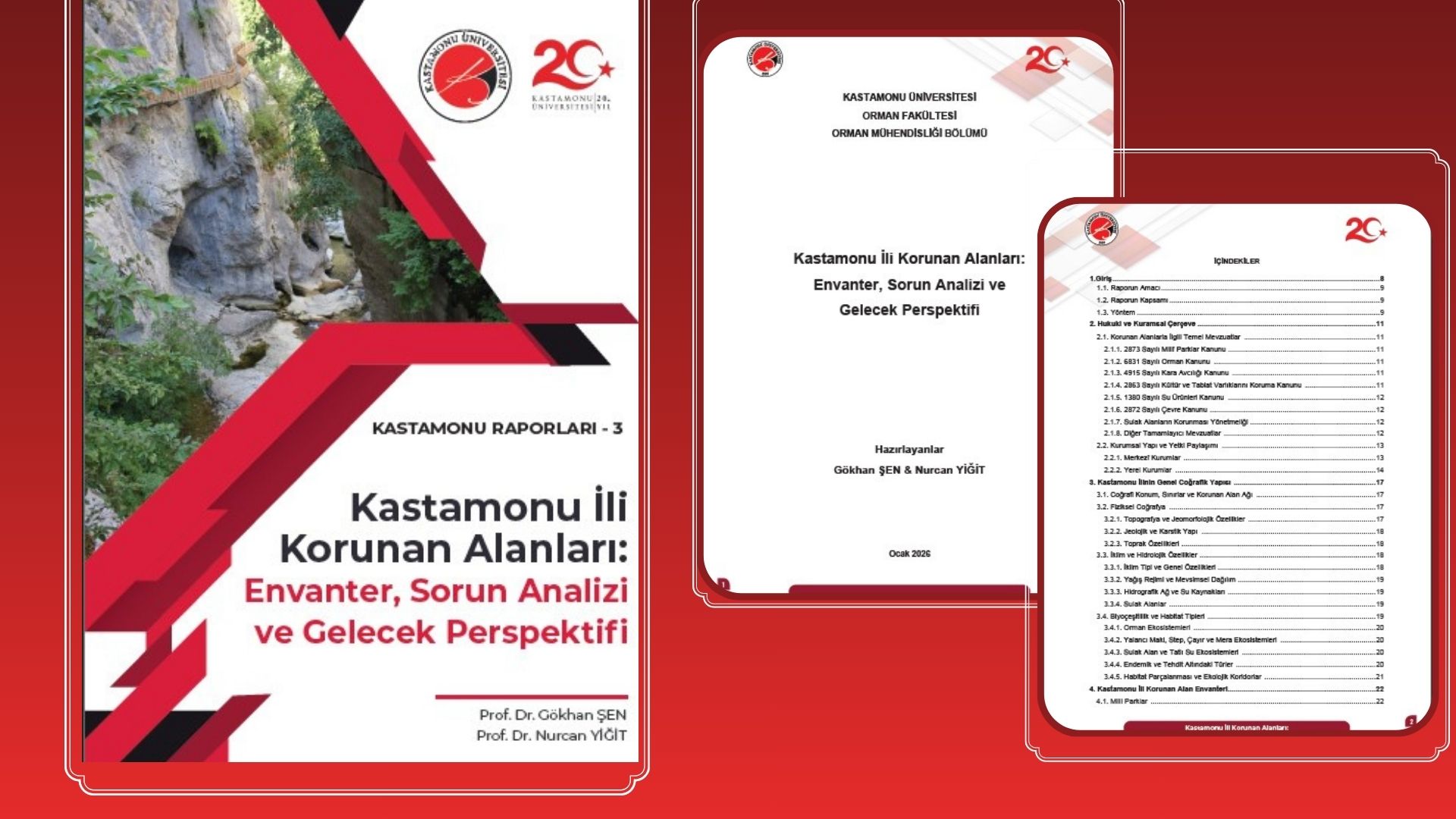
The "Kastamonu Reports" series, prepared by Kastamonu University, continues with studies examining Kastamonu's natural, environmental, and socio-economic structure based on scientific data. In this context, the report titled "Protected Areas of Kastamonu Province: Inventory, Problem Analysis, and Future Perspective" was published.
In the report prepared by faculty members from the Department of Forestry Engineering at our university's Faculty of Forestry, Prof. Dr. Gökhan Şen and Prof. Dr. Nurcan Yiğit, national parks, nature parks, wetlands, wildlife development areas, and natural assets located within the borders of Kastamonu province were examined through a comprehensive inventory study.
While it was emphasized that our province, with approximately 67% of its land area covered by forests, is one of Türkiye's leading natural areas, it was noted that the province holds a noteworthy position not only on a national but also a global scale in terms of biodiversity. The study also analyzed the current status, legal and institutional structure of the areas in question, and the main problems encountered, and included assessments for the future period.
The report highlights that Kastamonu's floristic and faunistic diversity still holds significant potential for further research. The presence of endemic species, such as the minor Asian Canyon Fern, which has been documented in the world literature, highlights the province's scientific importance. In addition to iconic areas like the Küre Mountains and Ilgaz Mountain, the protected area network has expanded to include new areas such as the Olukbaşı Nature Park and the Mysterious Cave, both registered in 2025.
The study also detailed the risks faced by protected areas. It is stated that mining activities, quarries, energy transmission lines, and unplanned tourism practices put land use pressure on sensitive ecosystems, and it was emphasized that disasters such as floods, inundations, and landslides caused by climate change also threaten the integrity of natural areas. The report's highlights included the effects of increased visitor density on wildlife.
The report recommended technology-supported approaches for managing protected areas. It was stated that fields need to be monitored more effectively using camera traps, remote sensing systems, and continuous monitoring mechanisms, and that the aim is to protect habitat integrity and support species' adaptation to climate change through ecological corridors planned to be established between the Küre Mountains and the Ilgaz Mountains.
Commenting on the report, our Rector, Prof. Dr. Ahmet Hamdi Topal, highlighted the value of addressing Kastamonu's natural areas with scientific data, using the following words:
“Our university considers scientific studies based on the natural, ecological, and community-focused characteristics of the province in which it is located as a primary responsibility. This study, prepared as part of the Kastamonu Reports series, not only reveals the current state of protected areas but also provides an academic foundation for future planning periods. I believe that such studies on the protection of natural heritage will be guiding for relevant institutions and stakeholders.”
Our rector also thanked the academics who contributed to the report's preparation and stated that the Kastamonu Reports series would continue under different thematic titles.
Click here to access the report.