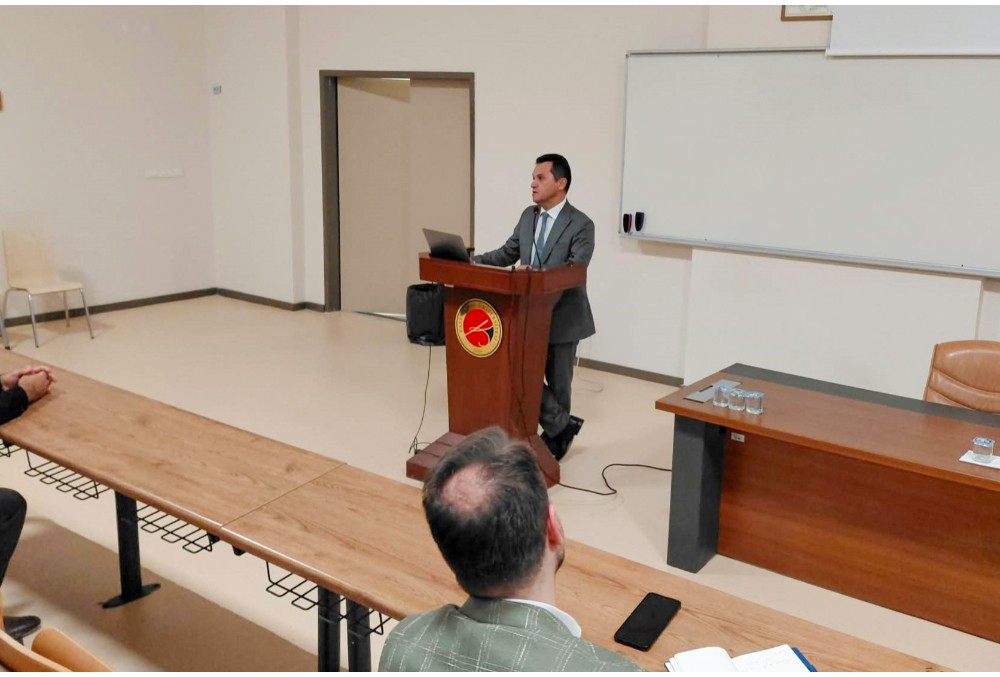
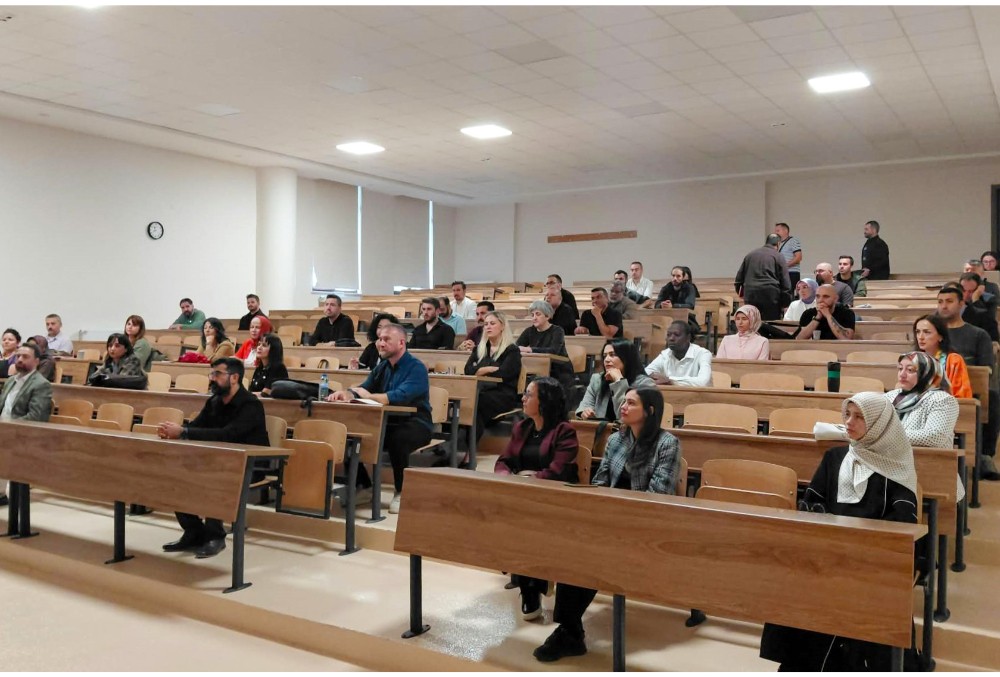
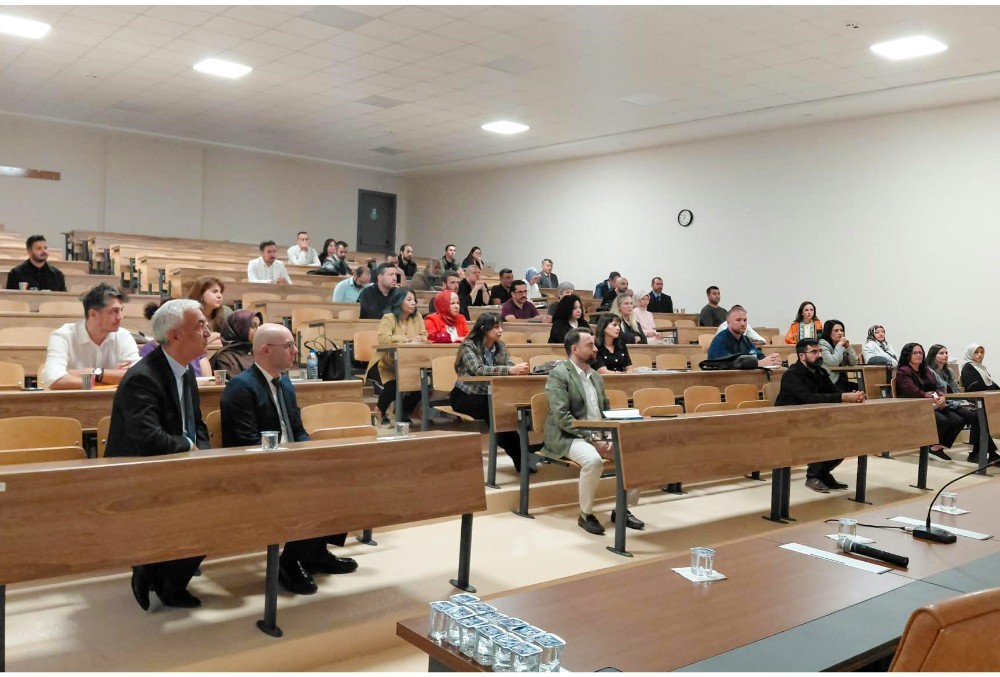
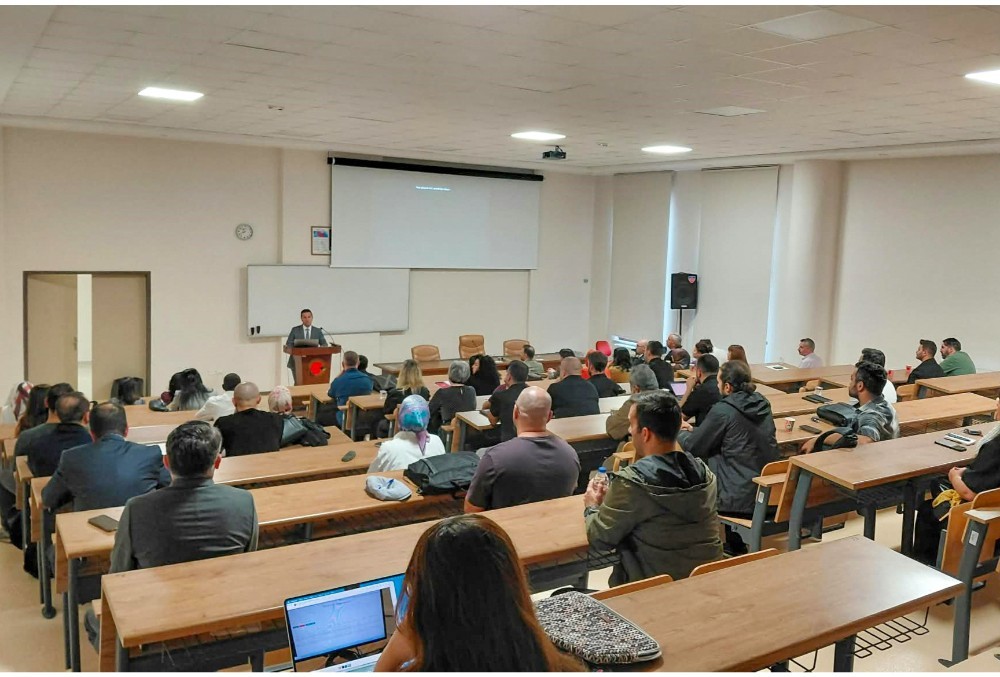
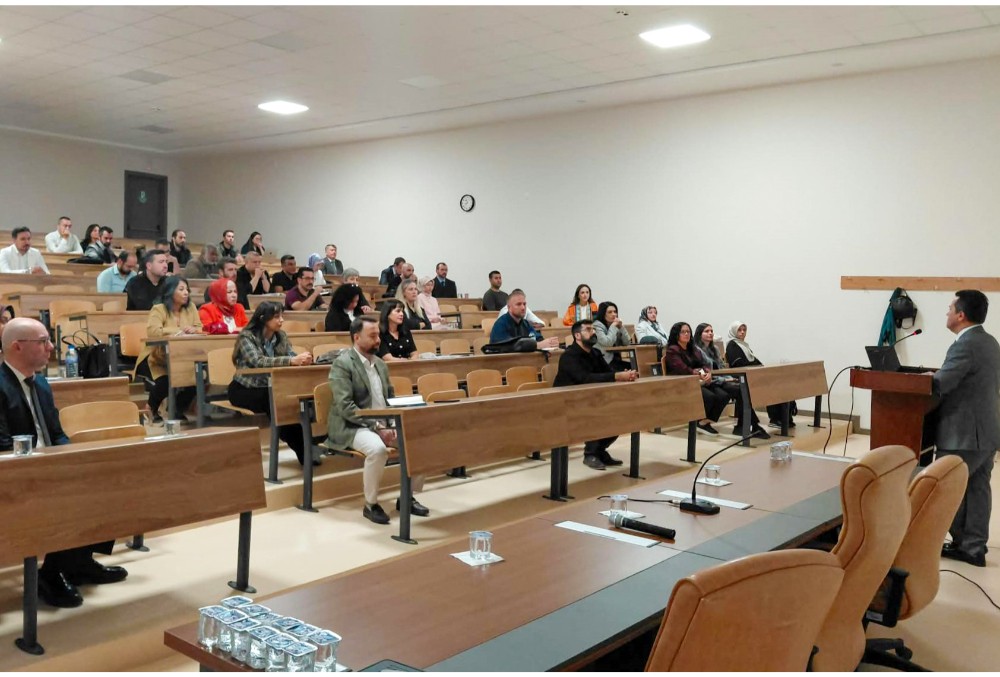
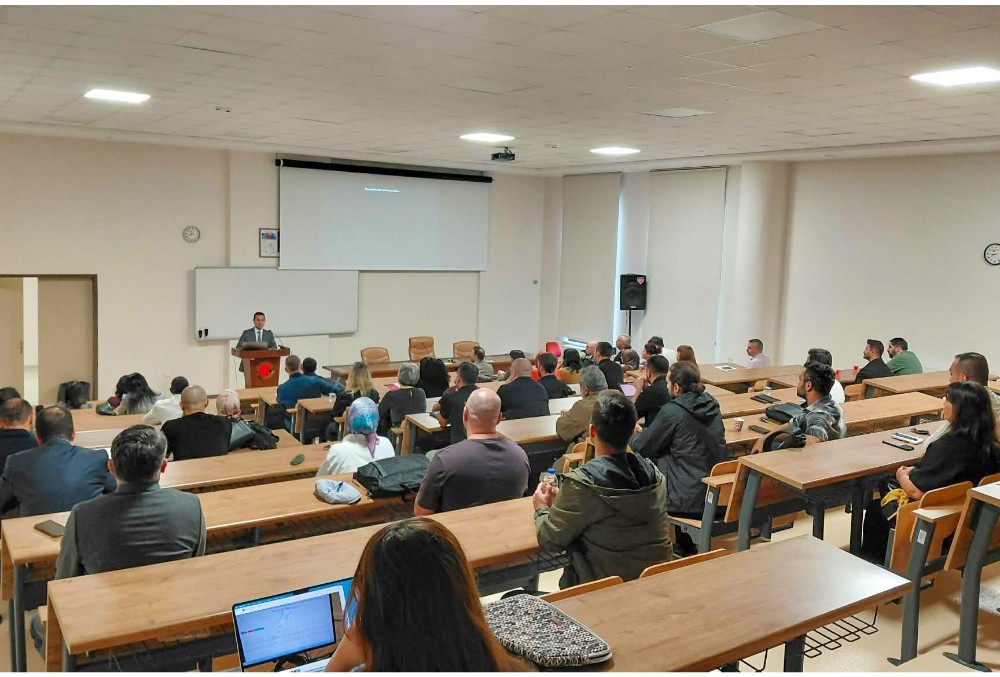
The September session of the Educators' Training Certificate Program, organized at Kastamonu University to improve the teaching competencies of academic staff and enhance the quality of educational processes, began with the participation of 57 academic staff members.
Our Rector, Prof. Dr. Ahmet Hamdi Topal; Dean of the Faculty of Education, Prof. Dr. Ahmet Kaçar; Coordinator of Educational Excellence, Prof. Dr. Berat Ahi; Deputy Director of the Continuing Education Application and Research Center (KASÜSEM) at Kastamonu University; and Assist. Prof. Dr. Alkan Bayraktar attended the program's opening.
Addressing the participants at the opening, our Rector Prof. Dr. Ahmet Hamdi Topal stated that the Educators' Training Certificate Program should not be considered merely as an educational activity where certain courses are completed and a certificate is obtained at the end.
Our Rector, who stated that universities have the responsibility to provide quality education in addition to producing science, emphasized that scientific expertise and teaching competence are two important areas that complement each other.
Emphasizing that knowing a field well is not sufficient on its own to teach that field effectively, our Rector stated that understanding how students learn, structuring lessons effectively, using appropriate teaching methods, considering assessment and evaluation as part of the learning process, and establishing proper academic communication with students are among the elements of university teaching.
Pointing out that student profiles, learning environments, technology, and ways of accessing information in higher education are changing rapidly, our Rector stated that the developments in artificial intelligence, opportunities for open and distance learning, and digital learning environments necessitate a reevaluation of the teaching approach in universities.
Our Rector, stating that the program is considered not as a temporary activity at the university but as an institutional mechanism contributing to the continuous improvement of education quality, noted that the feedback from participants, the needs of the teaching staff, and the developments in higher education would guide the program's development in the following periods.
After the opening speech, the Coordinator of Excellence in Education, Prof. Dr. Berat Ahi, provided the participants with information about the general structure and implementation process of the program.
Stating that the needs of the university in the field of education and training, feedback obtained from faculty members, and current higher education approaches were taken into account in the preparation of the program, Ahi expressed that the program was not planned merely as an education process based on the transfer of knowledge. Ahi stated that the aim is to have a development process where participants can evaluate their own teaching practices and discuss different approaches with their colleagues.
Within the scope of the program, training will be conducted on the topics of Measurement and Evaluation in Education, Teaching Principles and Methods, Classroom Management, Barrier-Free University, and Legal and Administrative Risks in Academic Life.
Participants will also complete their programs by choosing two elective courses from the following topics: Open and Distance Learning, Adult Education and Lifelong Learning, Applications of Artificial Intelligence in Education, and Statistical Literacy.
Following the information session conducted by the Education Excellence Coordination regarding the program's operation, the structure of the courses, and the responsibilities of the participants throughout the process, the September session of the Train the Trainer Certificate Program commenced.