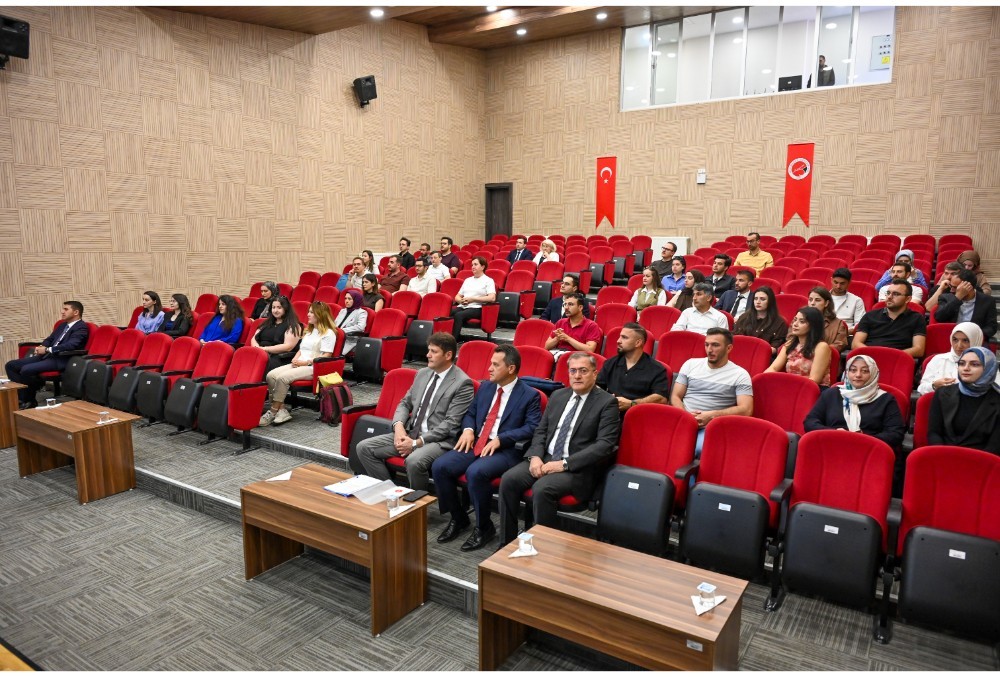
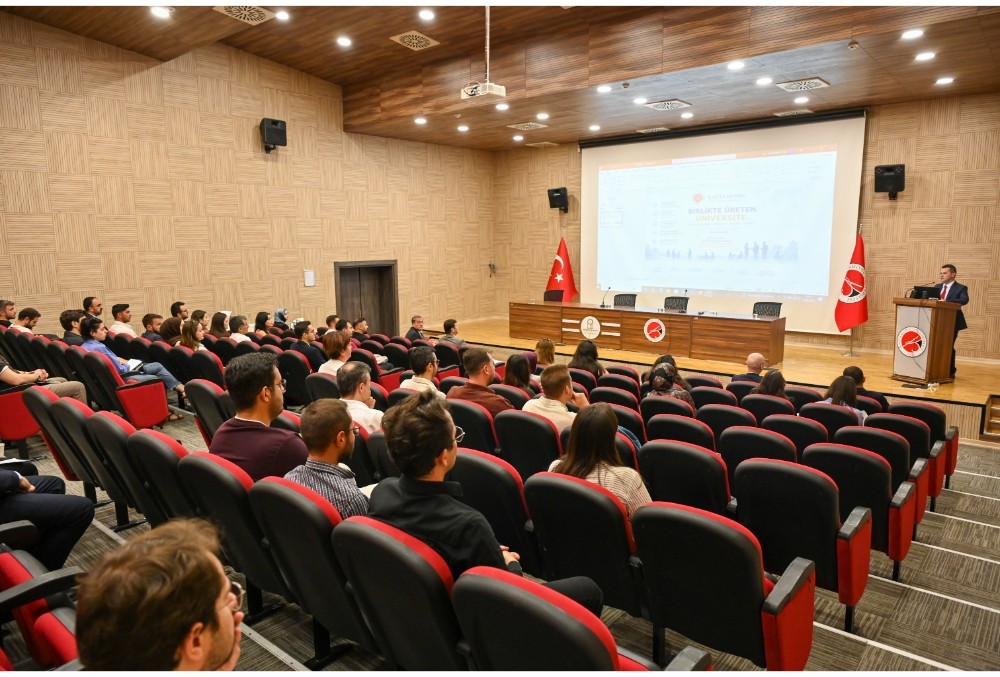
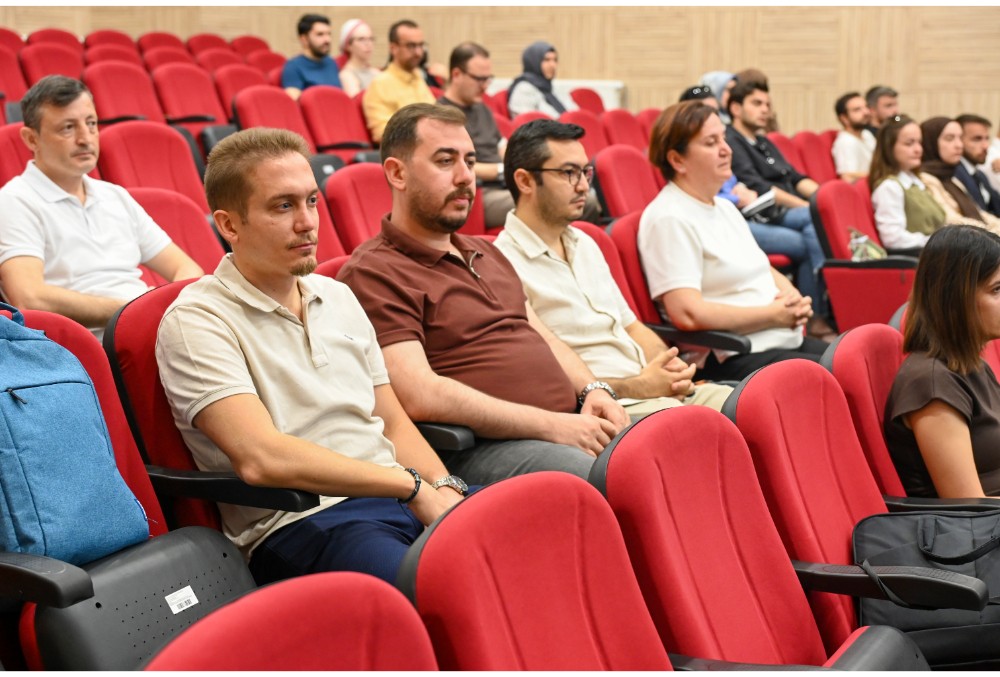
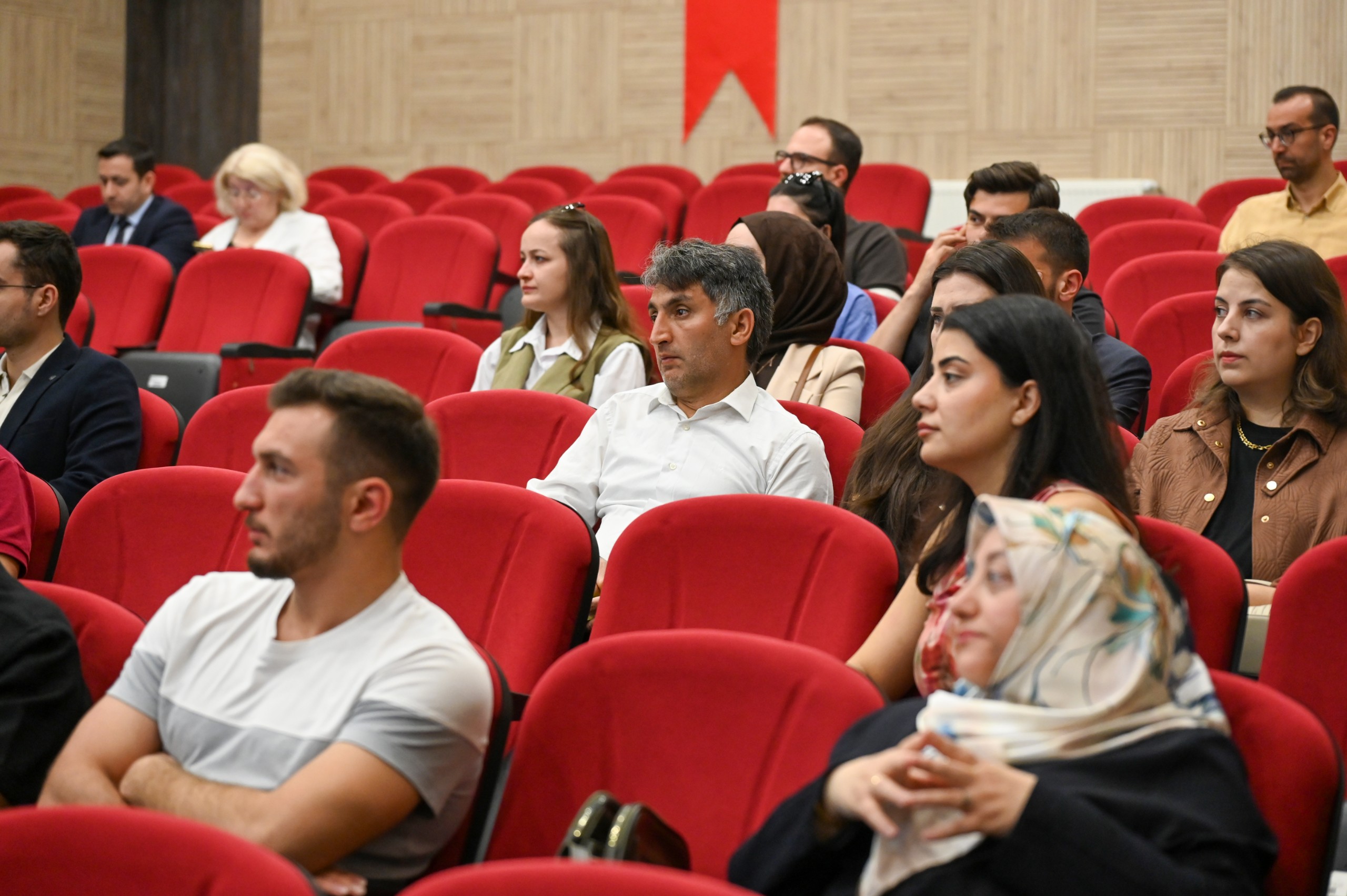
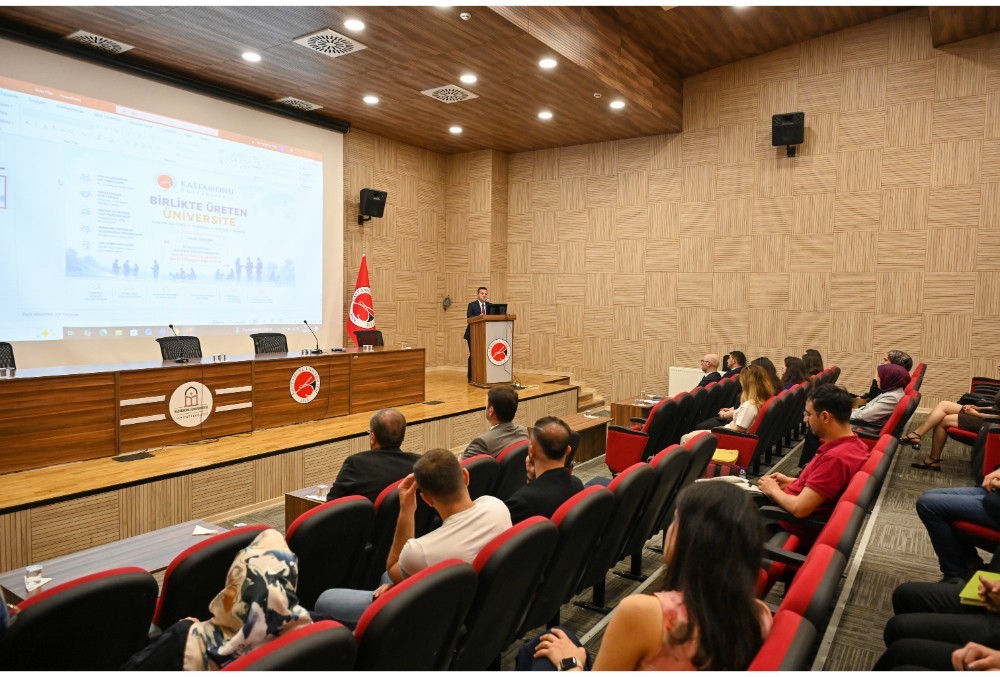
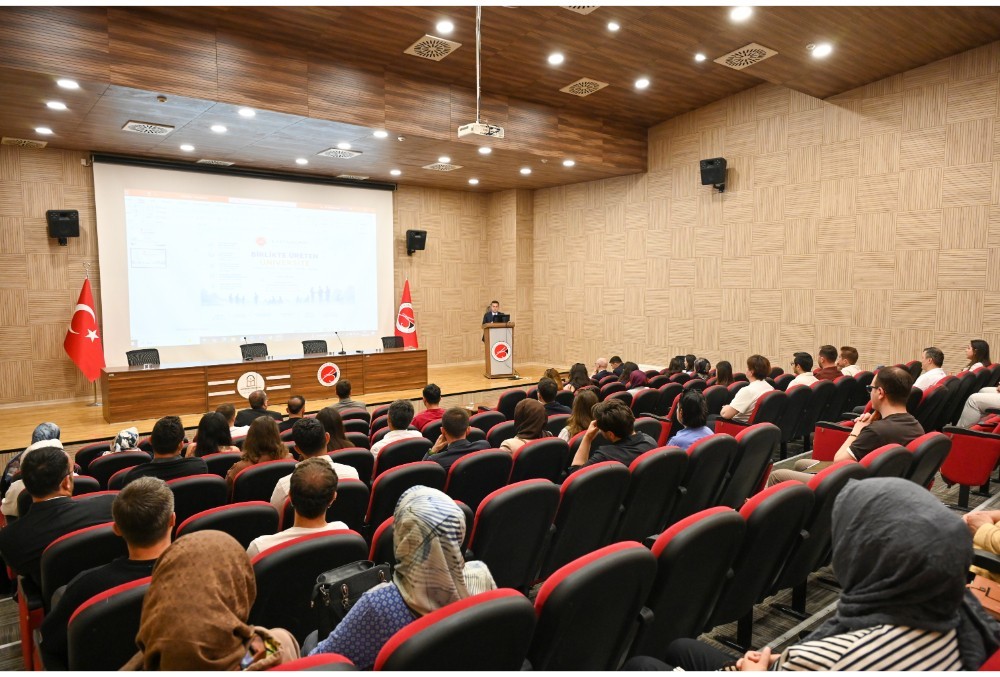
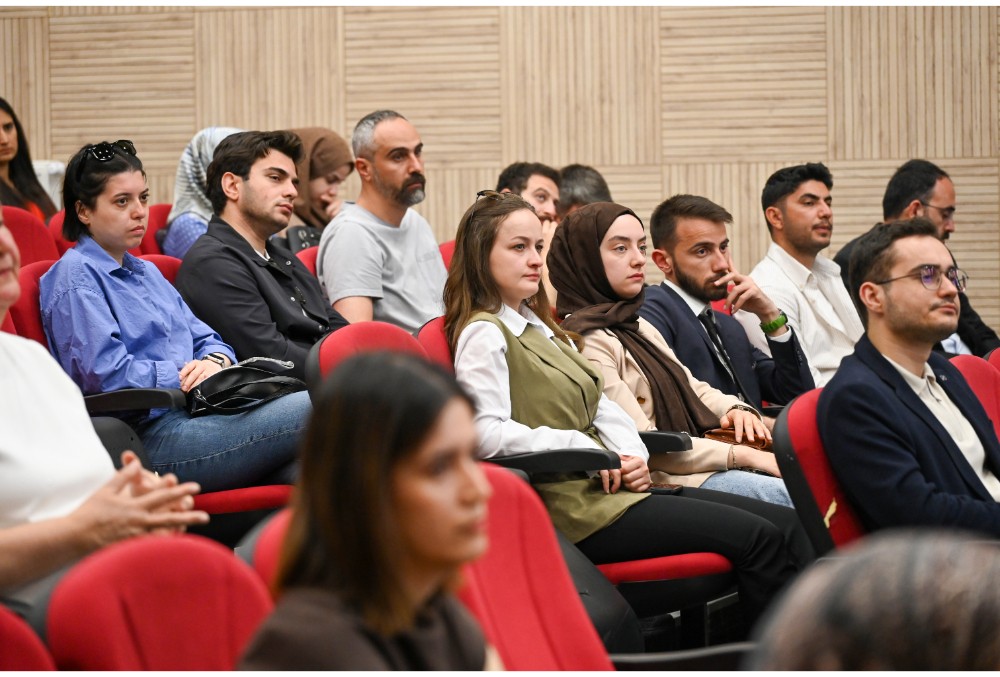
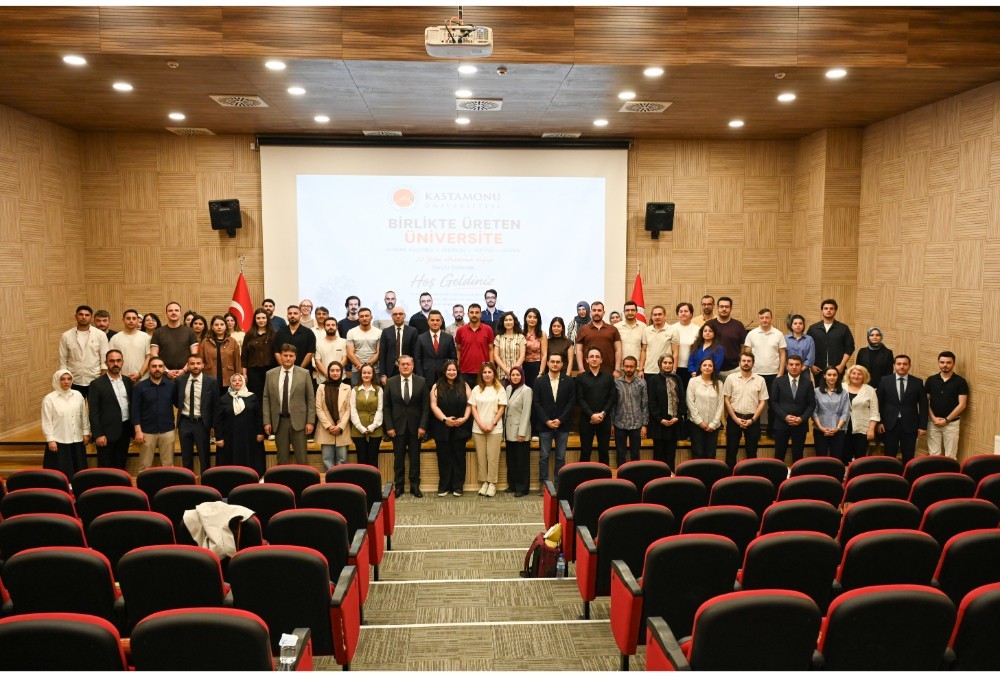
The Academic Staff Adaptation Program, prepared for the academic personnel who started their duties at Kastamonu University in the last two years, began on June 16, 2026, in the Faculty of Theology Conference Hall.
The program, conducted in coordination with our university's Personnel Department and the Excellence in Education Coordination, spans three days and includes an 11-hour training process. Within the scope of the Academic Staff Adaptation Program, participants will be informed about various topics related to our University's institutional structure, teaching and learning processes, research and project activities, quality studies, student-centered practices, and academic and administrative operations.
The program was attended by our Rector, Prof. Dr. Ahmet Hamdi Topal, Vice Rector, Prof. Dr. Mehmet Atalan, and Acting Secretary General, Assoc. Prof. Dr. İbrahim Demirbaş, Education Excellence Coordinator, Prof. Dr. Berat Ahi, and the newly appointed academic staff.
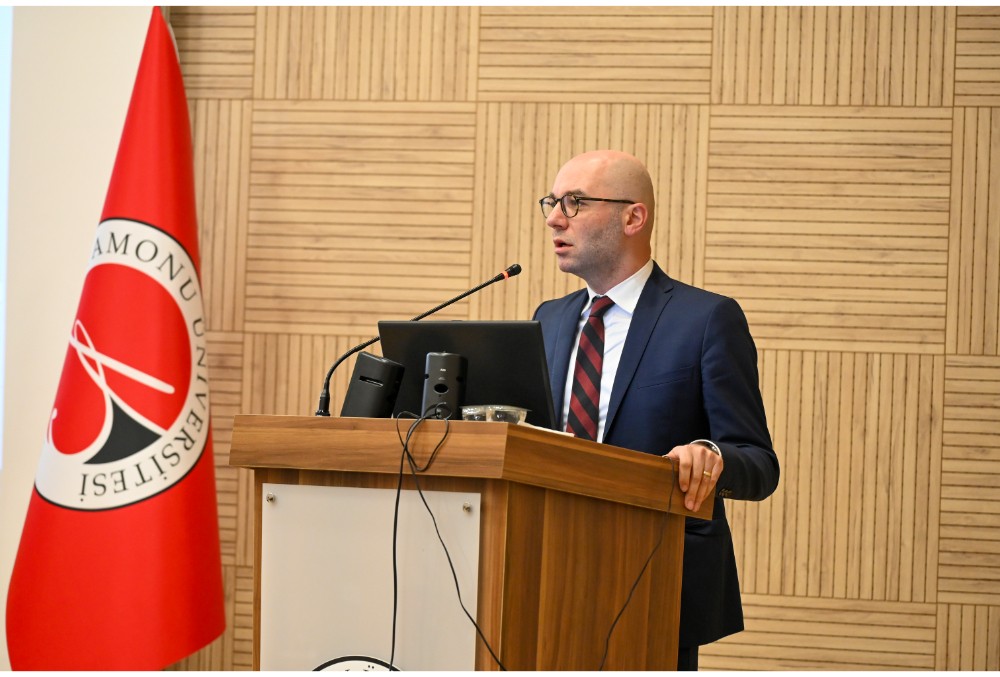
Speaking at the opening of the program, the Coordinator of Educational Excellence, Prof. Dr. Berat Ahi, stated that orientation programs serve not only to provide institutional information but also to create an environment for mutual learning and interaction. Stating that our university now has a 20-year history, Prof. Dr. Ahi emphasized the importance of sharing the institutional culture, work ethic, and academic experience developed during this process with the newly appointed academic staff.
Prof. Dr. Ahi stated that another purpose of the orientation programs is to listen to the knowledge, experience, and perspectives that new academics bring from different universities and academic traditions, and he expressed that this process is characterized by mutual exchange of ideas. Stating that universities can only develop through the coming together of different experiences, Prof. Dr. Ahi said that the contributions of newly appointed academics to the institution are as valuable as the experiences the institution will impart to them.
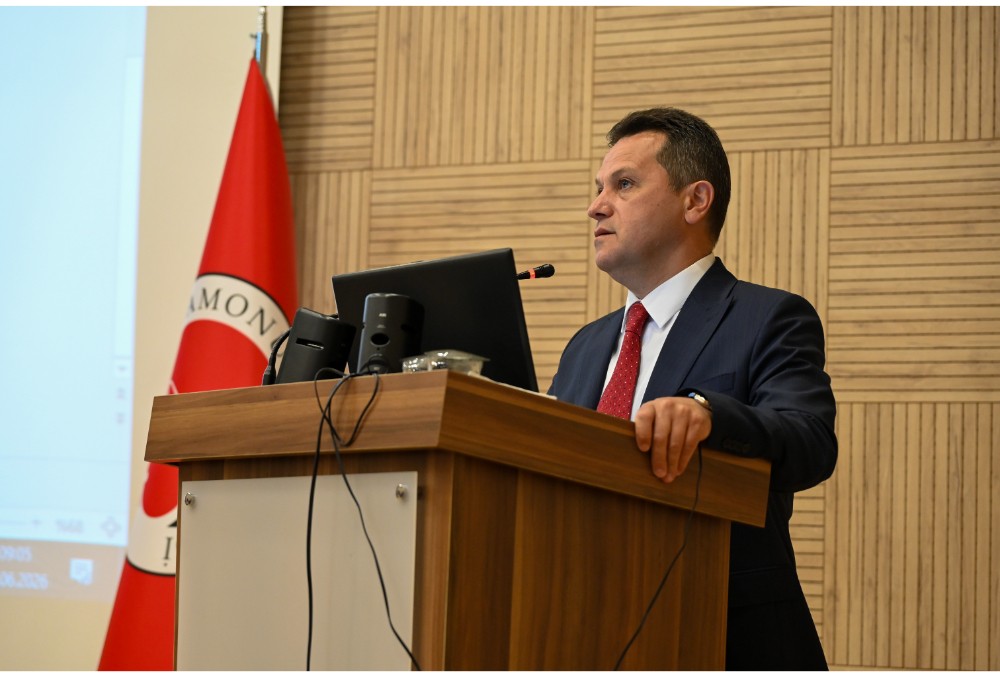
Speaking at the opening of the program, our Rector, Prof. Dr. Ahmet Hamdi Topal, stated that universities are not merely physical spaces but also a whole of institutional culture, work ethic, and shared values. Reminding us that our university has completed its 20th year, our Rector stated that during this time, a unique institutional memory, academic tradition, and work culture have developed at our university.
Emphasizing that the newly appointed academic staff are now part of this culture, our Rector stated that the university does not see itself as a completed institution, but rather operates with an open mind to continuous development and new ideas. Stating that in addition to academic production, collaboration, interaction, and team spirit are also among the important elements of university life, our Rector emphasized that all academic staff represent our University and that it is crucial for them to act with a sense of institutional responsibility.
In his speech, our Rector, addressing young academics in particular, stated that being an academic is not only about scientific production but also about understanding the functioning of the university, its institutional structure, and academic culture. Our Rector, who stated that all academics serving in various titles will contribute to the university's development with their knowledge and experience, emphasized the importance of institutional belonging, responsibility, and a culture of cooperation at every stage of academic life.
In evaluations for associate professors and professors, our Rector stated that, in the later stages of an academic career, not only the number of publications but also the importance of high-quality works that make a unique contribution to science increases. He stated that associate professors and professors are expected to lead the development of new research areas, increase interdisciplinary collaborations, and be the names guiding the academic development of the university.
However, emphasizing the importance of senior academics engaging in strong interactions with undergraduate and graduate students, our Rector stated that academics who guide the training of young researchers and share their knowledge and experience with students play a significant role in shaping the university's future.
In his speech, our Rector stated that universities can only develop with academic communities that produce together, support each other's work, and act in line with common goals, and he said that our University aims to maintain a peaceful, productive, and mutually trusting academic environment.
Our Rector, who stated that the different experiences and expertise of the newly joined academics will make significant contributions to the institution, wished the participants a successful and productive academic life.
As part of the three-day program, training sessions for newly appointed personnel will be conducted by the Personnel Department, General Secretariat, Student Affairs Department, BAP Coordination and Ethics Board, Quality Coordination, Information Technology Department, Health, Culture and Sports Department, Press and Public Relations Consultancy, External Relations Coordination, and the Education Excellence Coordination. The program will end with an evaluation and closing session.